“13 Species” search results (500)

The basic knowledge of coffee beans the origin of the species of coffee beans
West Africa, the origin of coffee grown in Liberia, has a strong adaptability to all kinds of environments, such as high or low temperature, humidity or dryness, except that it is not resistant to leaf rust and its flavor is worse than that of Arabica, so it is only traded or planted in some West African countries (Libya, C ô te d'Ivoire, etc.). Among the coffee in circulation in the world market, about
2016-06-30 Coffee beans basics species origin west Africa Libby subspecies coffee
Multi-floral Bolivian Coffee Manor introduces the flavor of Bolivian coffee producing areas
The goal of planting coffee in the whole Takesi manor is 200ha, but only 13ha is planted and harvested very little Typica species, and the annual yield is only 120bags. This is not only fine agriculture, but also a farming model that respects nature. Takesi is the name of the local aborigines, the place name and the snow water from the mountains, also known as Takesi. After the publication of the CoE final in 2009, Takesi is no longer without.
2016-07-27 Diverse fragrant Bolivia coffee manor introduction producing area flavor whole T
Coffee rookie entry-level learning coffee lesson 1 basic knowledge of coffee introduction to coffee varieties
Coffee belongs to the evergreen shrub of the genus Rubiaceae, which is centered in the tropics. There are about 6000 species of Rubiaceae belonging to 500 genera. Coffee has always been thought to have certain effects, such as strengthening the stomach, waking up the brain, stopping bleeding, dissipating heat, strengthening the body, and so on. The more famous Rubiaceae plant is Gardenia jasminoides, whose fruit was dried and used as medicinal material a long time ago. The three native species of coffee
2016-02-17 Coffee rookie introduction learning one lesson fundamentals knowledge learning variety coffee
A variety of flowers and vanilla sweet Bolivian coffee producing areas introduce the snow vein estate northeast of La Paz.
The goal of planting coffee in the whole Takesi manor is 200ha, but only 13ha is planted and harvested very little Typica species, and the annual yield is only 120bags. This is not only fine agriculture, but also a farming model that respects nature. Takesi is the name of the local aborigines, the place name and the snow water from the mountains, also known as Takesi. After the publication of the CoE final in 2009, Takesi is no longer without.
2016-06-29 Variety flower scent vanilla sweet Bolivia coffee producing area introduction snow vein Zhuang
Basic knowledge of high-quality coffee classification of various parts of coffee trees
1. Root coffee is a shallow root crop, and the plants propagated by seeds are conical roots. Root system refers to the general name of root. The root morphological distribution and depth of shade varieties / soil conditions and agricultural technical measures are different. From the point of view of varieties, the roots of small / medium grain species are shallower, while those of large grain species are deeper. Under normal circumstances, there is a thick and short taproot and many well-developed lateral roots. Yunnan small-grain coffee has been growing for 3-4 years.
2014-11-13 Coffee knowledge coffee basics common sense classification
Coffee beans Coffee varieties Yunnan Arabica coffee
Yunnan is China's main coffee producing area. Yunnan is located in the subtropical mountain climate zone south of the Tropic of Cancer, with unique plateau red soil, fertile loose soil, mild climate, especially suitable for planting small coffee species. Yunnan coffee was first introduced by French missionaries in 1902. Up to now, 24 coffee trees with more than 90 years old still grow in Zhukula Township, Binchuan County. 1914 Ruili Jing
2015-01-04 boutique coffee beans coffee type yunnan small china essential
Morphology of quality species in Colombian coffee producing area
In terms of yield or texture, Colombian coffee is first produced by Medellin, which is characterized by full granules, rich nutrition, moderate acidity, good balance, rich aroma and soft taste. In addition to Medellin, the provincial capitals of two neighboring provinces in the south, Armenia and Manizales, are also famous coffee producers.
2016-06-01 Colombia coffee origin quality species morphology yield or texture brother
Coffee three native species Arabica species: Ethiopia 90+levelup Flower language Sunlight Sidama
Coffee belongs to Rubiaceae coffee evergreen shrubs, tropical regions as the center, about 500 genera 6000 species of Rubiaceae plants distributed in this. Coffee has long been considered to have certain medicinal effects, such as stomach, mind, hemostasis, heat dissipation, physical strength and so on. There are about 40 species of plants in the genus Coffea, but only Arabica, Robusta and Libby can produce coffee beans with commercial value.
2016-04-05 coffee three major native species a rabbi kaspecies ethiopia 90 +lev
El Salvador Himalayan coffee flavor with soft, slightly sour and beautiful sweetness
El Salvador was originally inhabited by the Mayan Indians. Scenery of the Republic of El Salvador (11 pictures) was colonized by Spain in 1524. Independence was declared on September 15, 1821 and later became part of the Mexican Empire. In 1823 the empire collapsed and El Salvador joined the Union of Central America. The Communist Party of China was declared on February 18, 1841 after the disintegration of the Union in 1838.
2016-08-31 Overall soft slightly sour good sweetness El Salvador Himalayan coffee flavor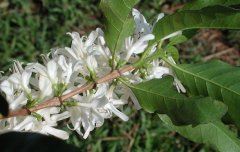
Do you know when the coffee blossoms will bloom?
Beautiful coffee flowers: every early spring, milky flowers are covered with branches, set off by the green leaves that hang to the ground, making them more delicate and beautiful. Coffee flowers exude a strong aroma, do not have some amorous feelings, but the flowering period is very short. Several to dozens of flowers are clustered in the axils of leaves, and the second to fifth flowers are planted on a flower axis. The flowers are white and fragrant. The petals of medium and small seeds are generally 5, and the petals of large seeds are generally 5.
2015-09-25 Coffee appreciate know flowers when open?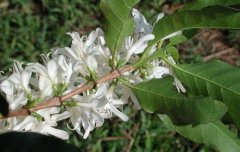
Fine Coffee learn the flowering process of Coffee trees
Beautiful coffee flowers: every early spring, milky flowers are covered with branches, set off by the green leaves that hang to the ground, making them more delicate and beautiful. Coffee flowers exude a strong aroma, do not have some amorous feelings, but the flowering period is very short. Several to dozens of flowers are clustered in the axils of leaves, and the second to fifth flowers are planted on a flower axis. The flowers are white and fragrant. The petals of medium and small seeds are generally 5, and the petals of large seeds are generally 5.
2014-09-30 Coffee knowledge boutique caffeine coffee tree coffee tree blooming
Origin Culture and species Morphology of Colombian Coffee
The earliest records of coffee cultivation in Colombia appear in a book called The Illustrated Orinoca by Spanish missionary Jose Gumilla. He describes what he saw when he preached on both sides of the Meta River in 1730, in which he mentioned the local coffee plantation. By 1787, other missionaries had spread coffee to other parts of Colombia.
2016-06-08 Colombia Coffee Origin Culture species form about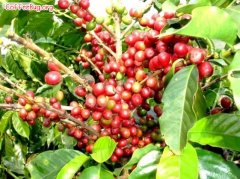
The basic knowledge of coffee beans The three original species of coffee
Coffee belongs to the evergreen shrubs of the genus Coffee of Rubiaceae, centered in tropical regions, with about 500 genera and 6000 species of Rubiaceae plants distributed here. Coffee has long been thought to have certain medicinal effects, such as invigorating stomach, refreshing mind, stopping bleeding, dissipating heat, strengthening body, etc. More famous Rubiaceae plants and gardenia, its fruit has long been dried as medicine
2015-11-06 coffee beans basics coffee three big native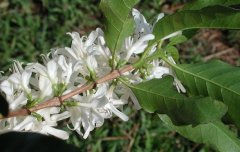
High-definition pictures of coffee flowers appreciate the process of growing boutique coffee beans
Go to the coffee taste network to exchange beautiful coffee flowers: every early spring, milky flowers are covered with branches, set off by the vertical green leaves, more delicate and beautiful. Coffee flowers exude a strong aroma, do not have some amorous feelings, but the flowering period is very short. Several to dozens of flowers are clustered in the axils of leaves, and the second to fifth flowers are planted on a flower axis. The flowers are white and fragrant. The petals of medium and small seed species are generally 5.
2015-10-14 Coffee HD picture appreciation boutique coffee beans planting process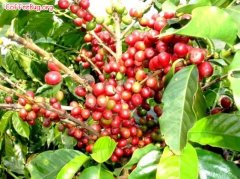
The basics of coffee beans the three native species of coffee
Coffee belongs to the evergreen shrub of the genus Rubiaceae, which is centered in the tropics. There are about 6000 species of Rubiaceae belonging to 500 genera. Coffee has always been thought to have certain effects, such as strengthening the stomach, waking up the brain, stopping bleeding, dissipating heat, strengthening the body, and so on. The more famous Rubiaceae plant is Gardenia jasminoides, whose fruit was dried and used as medicinal material a long time ago. The three native species of coffee
2015-01-26 Coffee beans basic knowledge coffee three native belong to grass family evergreen
Hand Net Baking Galapagos Santa Cruz Manor Old Bourbon
Ecuador, the smallest country on the rugged Andes plateau. Vibrant indigenous cultures and well-preserved colonial architecture, otherworldly volcanic landscapes and dense tropical rainforests. When it comes to one of Ecuador's most famous attractions, of course it's the Galapagos Islands. One of the cleanest, most pristine places on earth. Galapagos Islands (Cologne) consists of 19 islands
2014-08-04 Coffee Knowledge Coffee Roasting Santa Cruz Manor Bourbon Species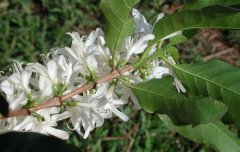
What is the use of coffee encyclopedia coffee flowers enjoying coffee flowers soaking water and drinking?
Beautiful coffee flowers: every early spring, milky flowers are covered with branches, set off by the green leaves that hang to the ground, making them more delicate and beautiful. Coffee flowers exude a strong aroma, do not have some amorous feelings, but the flowering period is very short. Several to dozens of flowers are clustered in the axils of leaves, and the second to fifth flowers are planted on a flower axis. The flowers are white and fragrant
2022-05-28 Coffee encyclopedia coffee flower appreciation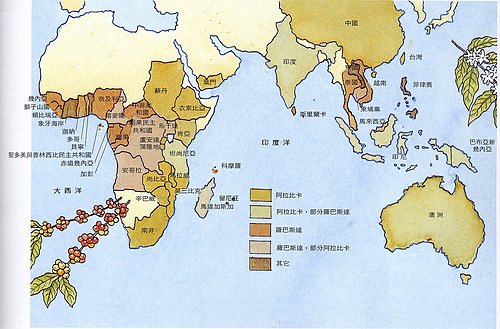
The basic knowledge of Coffee beans the three native species of coffee Robsta species Arabica species Libby
Basic knowledge of coffee beans (1) Coffee belongs to the evergreen shrub of the genus Rubiaceae, which is centered in the tropics. There are about 6000 species of Rubiaceae belonging to 500 genera. Coffee has always been thought to have certain effects, such as strengthening the stomach, waking up the brain, stopping bleeding, dissipating heat, strengthening the body, and so on. The more famous Rubiaceae plant is Gardenia jasminoides, whose fruit was dried and used as medicine a long time ago.
2016-03-17 Coffee beans Basics Coffee Native Robes Booth Rabbi Card seed Libby
Species morphology of Colombian coffee-flavored coffee
The main varieties of Colombian coffee are small grains of coffee. Plants are small trees or large shrubs, 5-8 m tall, usually much branched at base; old branches gray-white, nodes dilated, young branches glabrous, compressed. Leaves thinly leathery, ovate-lanceolate or lanceolate, 6-14 cm long and 3.5-5 cm wide, tip long acuminate, acuminate part 10-15 mm long, base cuneate or slightly obtuse, rarely rounded, entire or
2016-06-05 Columbia Coffee Flavor species Morphology varieties Major
Fine coffee Colombian coffee species morphology
The main varieties of Colombian coffee are small grains of coffee. Plants are small trees or large shrubs, 5-8 m tall, usually much branched at base; old branches gray-white, nodes dilated, young branches glabrous, compressed. Leaves thinly leathery, ovate-lanceolate or lanceolate, 6-14 cm long and 3.5-5 cm wide, tip long acuminate, acuminate part 10-15 mm long, base cuneate or slightly obtuse, rarely rounded, entire or
2016-05-26 Boutique Coffee Columbia species Morphology varieties Major